|
If you have planted a young unpruned lime tree and plan to prune it yourself:
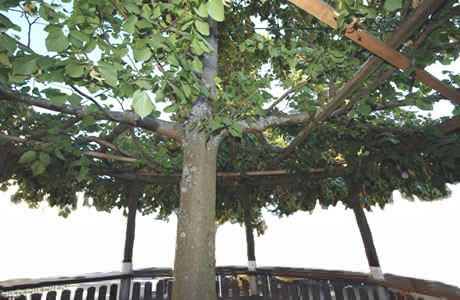
- Progressively create the first storey at a minimum height of 2m50 by training the branches to grow along the wooden structure (photo 1).
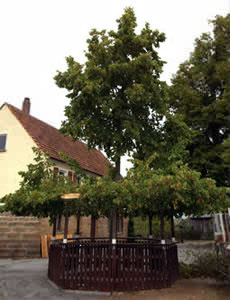
- Wait for the tree to be tall enough to place the second storey high enough for dancing to take place, and cut the branches between the two levels (photo 2).
- Let the third part of the tree grow to create the third storey.
|